

Why Some Homes Just Feel Better the Moment You Walk In
Question for you. Do you remember a time when you walked into a house and simply let out a breath of air? Not because of its magnificent interiors, but maybe because something about the design made you instantly feel comfortable, as if you’ve been there before.
And then you have walked into another home, same city, similar size, possibly more money spent on it, and felt absolutely nothing. Neat, yes. Styled, sure. But flat. Like a photograph of a home rather than an actual one.
We have been designing handcrafted furniture that complements exclusive homes, and we can tell you this difference is not accidental. It is not about taste, and it definitely isn’t luck. It comes down to specific material choices. And the single biggest contributor, the one most people don’t consciously notice but always feel, is premium wooden furniture.
Let us explain exactly why.
What You Are Actually Feeling When a Room Feels “Nice and Better”
Most people describe a well-designed room as better, but they can’t always explain why. What is really happening is that your nervous system is responding to the material before your brain has even formed an opinion about it.
Synthetic surfaces like laminates, MDF, and high-gloss finishes reflect light in a very uniform way. They look clean, but they feel flat to the eye. There is no variation, no depth, nothing for your gaze to settle into.
Wood does the opposite. The grain moves. The tone shifts with the light. There is texture, shadow, and small irregularities, and your eye reads all of that as life.
That’s the warmth people are sensing. It is not just a feeling. It is a direct sensory response to a material with real depth and variation, something no synthetic surface can fully replicate, no matter how well it is photographed in a catalogue.
Why Solid Wood Furniture Makes Rooms Feel Quieter and More Comfortable
There is an aspect of wood in home decor that hardly anyone thinks about. Enter a room where there is wooden furniture with soft upholstery, and then another one with reflective surfaces. You will immediately sense the difference without knowing what it is.
It is important to note that wood makes wonderful acoustics. Depending on its use and type of wood, it reflects and absorbs sound effectively. Unlike other shiny and hard surfaces like glass and tiles, the sound produced in rooms with solid wood furniture does not carry across because it cannot transmit the sound.
Individuals occupying a space with wooden furniture and wooden surfaces tend to be less tense and fatigued compared to individuals occupying a room without these pieces of wood. This has been scientifically proven from various experiments on body temperature to blood oxygenation, among others. The acoustic softness of wood accounts for some of this effect.
With proper flooring such as rugs, curtains, and soft upholstery on furniture, the acoustic effect of rooms is totally changed. The sound absorption ability makes this possible.
How to Arrange a Home to Maximize Warmth and Comfort
Buying the right furniture is only half of it. Before setting it up, make sure the surrounding space complements it, because even the most beautiful furniture can underperform if what’s around it doesn’t support its look and presence.
-
Wall colour matters more than you think. Terracotta, sage, cream, or warm beige soften the look of wood. Even pure white works, but it creates a stronger contrast, making the grain stand out rather than blend in.
-
Lighting can make or break it. Harsh overhead light flattens wood. A warm, directional lamp brings out the grain and depth, making pieces like a sheesham coffee table feel alive.
-
Mix wood tones, but anchor one. Avoid matching everything too closely. Let sheesham be the darker base, then add lighter woods like mango for contrast. That mix feels more natural and lived-in.
-
Give the wood room to breathe. Crowding takes away its impact. Keep styling simple with a few objects, some open space, and maybe a plant. Less really does more here.
-
Layer in natural textures. Pair wood with linen, cotton, jute, wool, or rattan. These materials work together to create a space that feels warm, grounded, and easy.
The Room-by-Room Logic of How Wood Shapes Comfort and Function
If you need help deciding where to begin, then this is how we would recommend proceeding, based on each room.

Image: Lakkadhaara
In your living room, we would start with the coffee table and the sideboard. They are furniture that you will be seeing and using every day, so their quality is something that’s going to make a real difference.
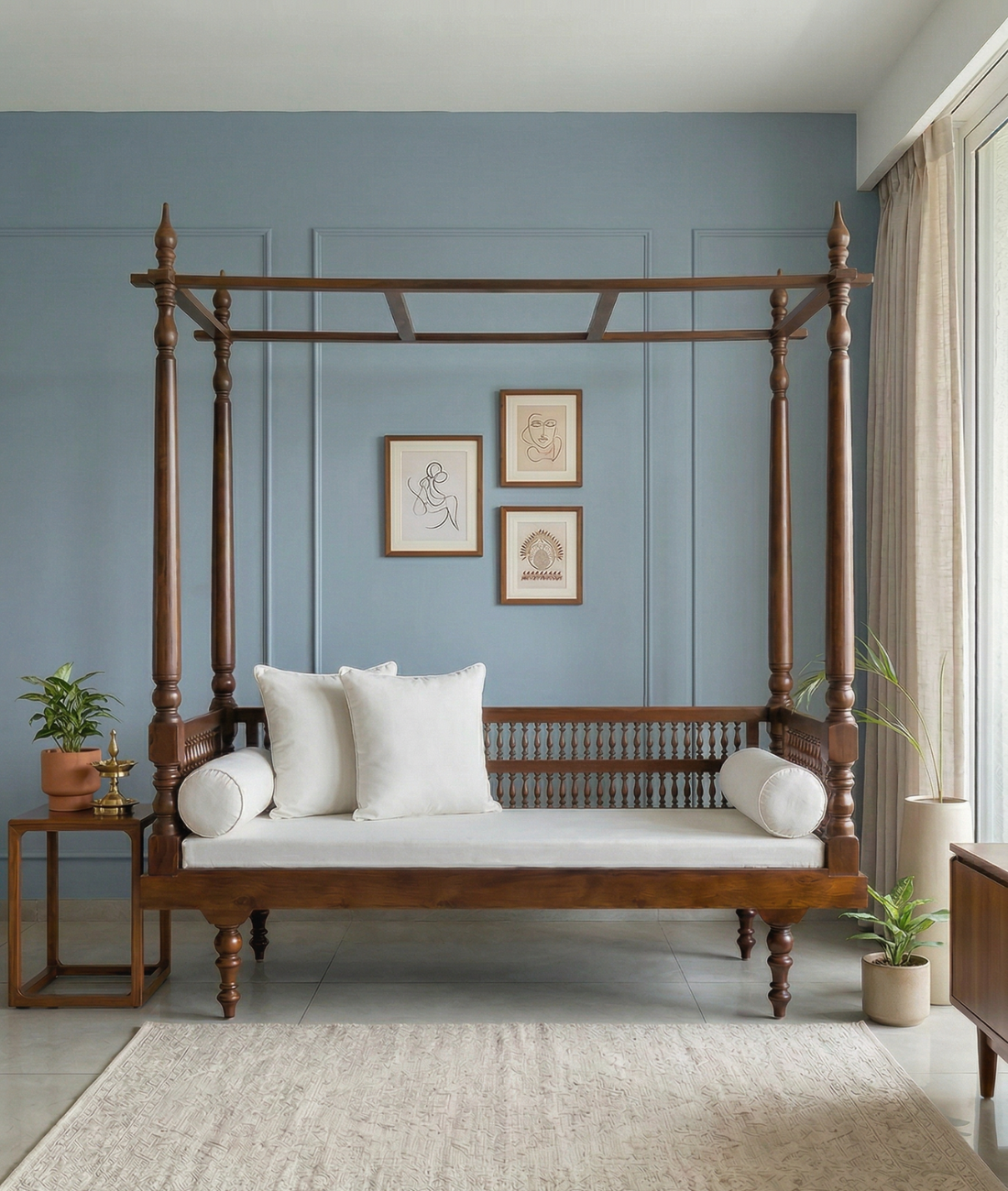
In your bedroom, good-quality daybed furniture crafted out of wood should be there in all its glory. It is not just aesthetically pleasing, but the very presence of wood also makes one feel more comfortable than metal or glass.

Your dining room is where sheesham stands out. A sheesham dining table often becomes the emotional centre of a home, the place where everything naturally gathers. It should feel grounded and settled in the space.
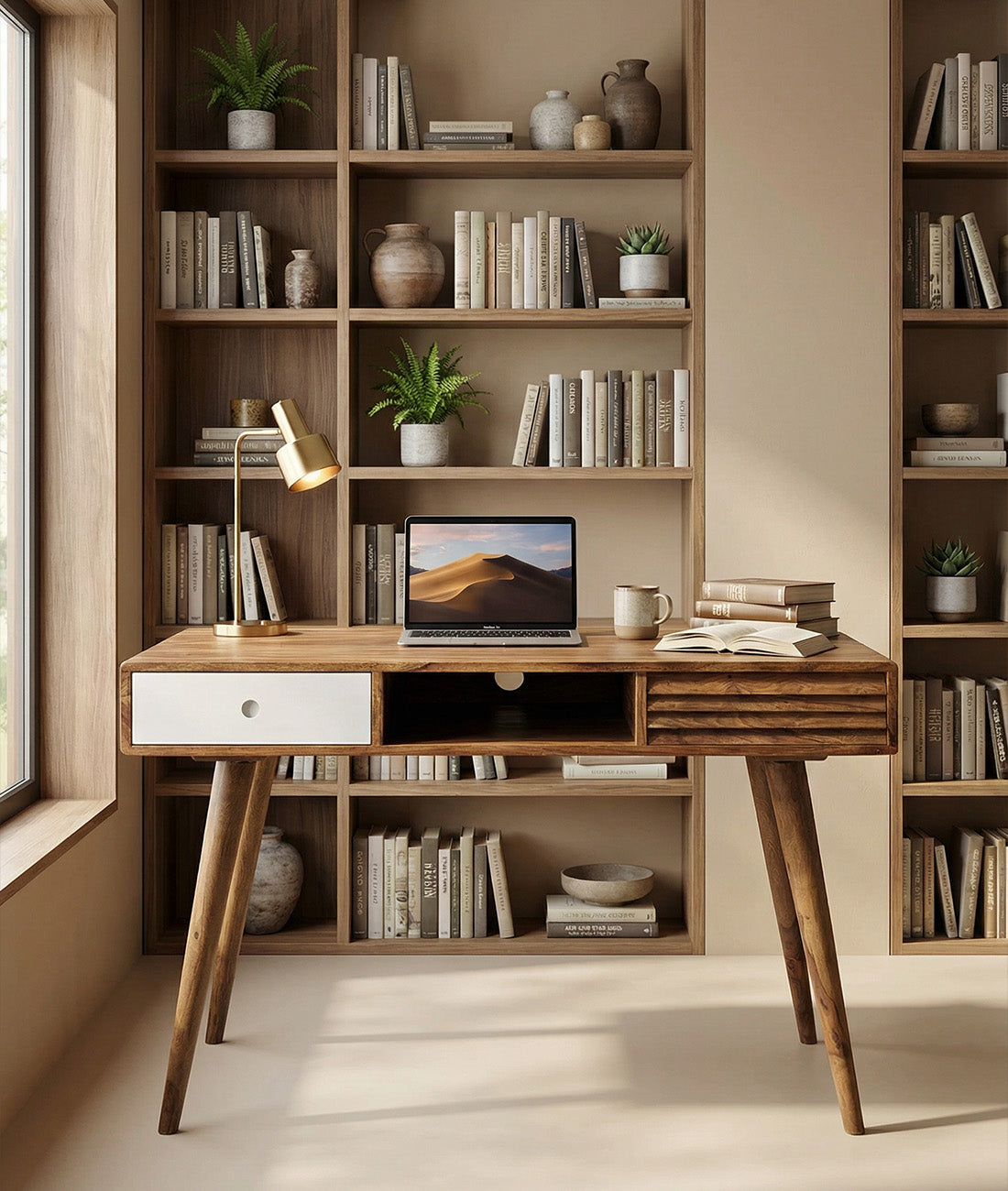
Your home office is where we would make the wooden office table for productivity alone. People tend to focus better in environments with natural materials. If you are spending hours a day there, the material around you really does matter.
FAQs
Does the distinction between solid wood and veneer matter?
Yes. Wood is durable; it can be sanded, repaired, and resurfaced. It absorbs moisture and develops a beautiful finish. Also, the veneer is brittle and flaking.
What can you do to make solid wood furniture warm and not heavy?
The use of appropriate color and lighting on the walls, natural lighting, textiles, and spacing play a big role here. Heaviness does not come from the material, but rather the lack of space or the wrong setting.
Is solid wood furniture expensive, and is it worth buying?
Yes, it is, but solid wood lasts about 20-30 years. Low-priced furniture requires replacement after 5-8 years. Moreover, solid wood can be restored.